Book a demo
Low-Wind Years and Climate Risk for Wind Farms
How climate diagnostics improve wind resource assessments in the APAC region
In recent years, several wind portfolios have experienced lower than expected wind seasons, leading asset managers and investors to question whether these events were isolated anomalies or part of a broader shift linked to climate variability and climate change.
For multiple wind projects worldwide, Climate Scale was asked to assess how exceptional recent low-wind years were, identify the climate drivers behind observed wind anomalies, and evaluate whether similar events could become more frequent or intense in the future.
These analysis are becoming increasingly important for wind resource assessment, long-term financial planning and climate risk management across the renewable energy sector.
The challenge: when is a “bad” wind year actually exceptional?
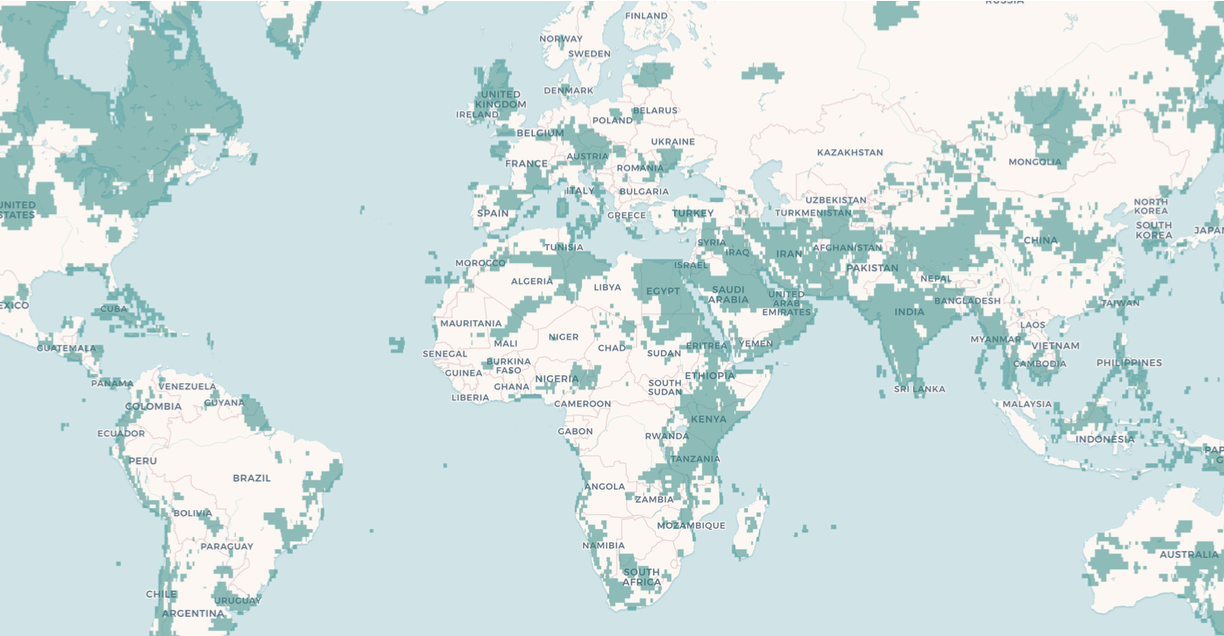
Let’s focus on a wind farm project in the APAC region.
The project owner had observed several years of lower than expected wind conditions, with one low-wind winter standing out as particularly damaging for energy production. The company requested a climate-informed wind resource assessment to understand:
- Whether the recent low-wind year fell within climate variability or represented an exceptional event.
- Which large-scale atmospheric and oceanic climate drivers were associated with low-wind seasons in the region.
- Whether similar wind anomalies could recur more frequently under future climate change scenarios.
- How to interpret future low-wind risk without overreacting to a single season.
This analysis was essential for revisiting energy yield assessments (EYA), refining financial risk models and communicating performance expectations to C-level and investors.
Climate Scale’s methodology: from wind anomalies to climate diagnostics powered by Vortex FdC
Climate Scale combines independent datasets and advanced climate diagnostics to deliver robust wind resource assessments for wind farms across different regions and climate regimes.
Understanding historical wind variability
Multi-source historical wind reconstruction
Several reanalysis datasets, high-resolution time series and nearby meteorological observations are compared to reconstruct long-term hub-height wind variability at the project site.
By analysing correlations, trends and consistency between datasets, Climate Scale identifies the most reliable sources to characterise local wind climatology and historical wind anomalies.
Wind climatology and anomaly assessment
Using the selected long-term datasets, Climate Scale evaluates the site’s historical wind climate and determines whether the observed low-wind year represents a statistically significant anomaly or falls within expected year-to-year variability.
This allows project stakeholders to better contextualise low-wind seasons and quantify their potential impact on long-term asset performance.
Large-scale climate pattern diagnostics
To understand whether observed wind anomalies are isolated events, part of regional decadal variability or linked to long-term climate change, Climate Scale analyses large-scale atmospheric circulation patterns and teleconnections.
Climate drivers such as:
- El Niño–Southern Oscillation (ENSO)
- Pacific Decadal Oscillation (PDO)
- East Asian Monsoon
- North Atlantic Oscillation (NAO)
can strongly influence regional wind conditions and low-wind winters across different parts of the world.
Understanding these climate drivers is critical for anticipating future wind variability and improving climate risk assessments for wind projects.
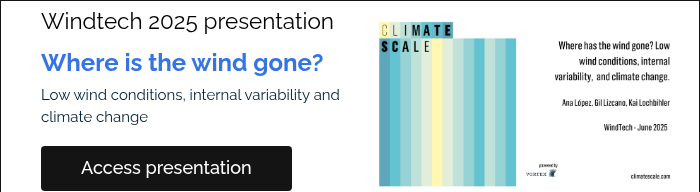
Similar questions around low-wind conditions, internal variability and climate change were explored by Climate Scale experts Dr. Ana Lopez, Dr. Gil Lizcano and Dr. Kai Lochbihler during WindTech 2025.
Projecting future wind conditions under climate change – powered by high resolution Vortex FdC data
Climate Scale also evaluates how wind conditions may evolve in future decades using an ensemble of downscaled CMIP6 climate models under different Shared Socioeconomic Pathway (SSP) scenarios.
Through statistical downscaling techniques, coarse-resolution global climate projections are translated into local hub-height wind conditions while preserving the climate-change signal from the original models. Climate Scale leverages high-resolution wind resource data from reference company Vortex FdC to calibrate and downscale Global Climate Models (GCMs), enhancing the accuracy and reliability of wind projections for renewable energy applications.
This integrated framework connects:
- local wind anomalies,
- regional atmospheric circulation patterns,
- and global climate projections
into a single climate-informed workflow for assessing future wind resource uncertainty and climate risk for wind farms.
Key insights for wind resource assessment
Analyses across multiple regions show that detailed, site-specific climate diagnostics are essential to properly understand low-wind years and future climate-related wind risk.
Generic assumptions about “bad wind years” or simplistic trend extrapolations are often insufficient — and can even be misleading — when evaluating long-term wind resource variability.
Robust wind resource assessments require:
- long-term climate diagnostics,
- multiple independent datasets,
- understanding of climate drivers,
- and future climate projections.
This is increasingly important as climate change introduces additional uncertainty into long-term wind farm performance assessments.
Business value: climate-aware wind diagnostics for wind projects
Climate Scale’s methodology provides:
A rigorous assessment of low-wind years
A data-driven evaluation of how unusual recent low-wind periods are, based on multiple independent datasets and lines of evidence. This supports decisions such as revisiting financial assumptions and energy yield projections.
Improved understanding of climate risk
A clearer view of the climate drivers influencing regional wind variability and wind anomalies, helping wind developers and asset managers communicate climate-related risk using science-based evidence.
Future-focused wind resource assessments
A climate-aware perspective on future wind conditions that incorporates long-term trends, internal climate variability and model uncertainty rather than relying solely on historical records.
This approach helps developers, investors and asset managers build more resilient wind project strategies under climate change.
These topics were further explored by Climate Scale experts Dr. Ana Lopez, Dr. Gil Lizcano and Dr. Kai Lochbihler during their WindTech 2025 presentation on low-wind conditions, internal climate variability and climate change.
Frequently asked questions
What causes low-wind years?
Low-wind years can result from natural climate variability, large-scale atmospheric circulation patterns or longer-term climate change trends. Regional climate drivers such as ENSO or PDO can significantly influence seasonal wind conditions.
Can climate change affect wind farm performance?
Yes. Climate change may alter long-term wind patterns, seasonal variability and the frequency of low-wind events, potentially affecting wind farm energy production and financial performance.
Why are climate diagnostics important for wind resource assessments?
Climate diagnostics help distinguish between normal climate variability and structural long-term changes. This improves risk assessment, energy yield modelling and investment decision-making for wind projects.
How can wind anomalies be assessed?
Wind anomalies are typically analysed using long-term historical datasets, reanalysis products, climate change diagnostics and statistical comparisons against historical climatology.
Share the word